Former Governor Andrew Cuomo stepped down in August 2021 after a series of sexual‑harassment allegations surfaced and a formal impeachment inquiry was launched by the New York State Assembly. Here’s a concise timeline of the key events:
Initial accusations (early 2021)
Multiple women—former staffers, aides, and acquaintances—publicly alleged that Cuomo had made unwanted sexual advances, pressured them for personal favors, and created a hostile work environment.
The most prominent allegation came from former aide Lynne Paterson, who claimed Cuomo asked her for a “sexually charged” massage and later threatened her job when she rebuffed him.
Investigations begin
The New York Attorney General’s Office opened a civil investigation into the claims.
Simultaneously, the State Assembly formed an impeachment committee to examine whether Cuomo’s conduct violated state law or ethical standards.
Findings and reports
In July 2021, the Attorney General’s report concluded that Cuomo had engaged in a pattern of sexual harassment toward multiple women, describing the behavior as “unwanted, inappropriate, and harassing.”
The Assembly’s impeachment committee voted 84‑17 to recommend impeachment on grounds of “misconduct in office” and “abuse of power.”
Political fallout
Several high‑profile Democrats, including Senate Majority Leader Chuck Schumer and former Governor David Paterson, called for Cuomo’s resignation.
On August 10 2021, Cuomo announced he would step down effective August 24, becoming the first New York governor in modern history to resign under such circumstances.
Legal outcomes
While the civil investigation confirmed harassment, no criminal charges—including any related to rape—were filed against Cuomo.
Some of the accusers settled civil claims with the state, receiving undisclosed compensation, but the settlements did not include admissions of guilt.
In short, Cuomo’s resignation was driven by a substantiated pattern of sexual‑harassment misconduct uncovered through both civil and legislative investigations, not by any criminal conviction for rape. The episode sparked a broader conversation about workplace culture and accountability in politics.
The “rent‑seeking class” — the segment of the elite that extracts wealth through political or regulatory privileges rather than by creating new value — has a clear incentive to champion Stoicism, even if the philosophy’s original aim was personal virtue and freedom from external circumstance.
Three interlocking reasons explain why this group finds Stoicism attractive:
Psychological alignment with a status‑quo mindset Stoicism teaches that external events are beyond our control and that the wise person should remain indifferent to them, focusing instead on inner judgment and virtue. For rent‑seekers, whose power depends on preserving existing institutional arrangements, this message dovetails neatly with a desire to keep the system unchanged. By encouraging people to accept “what is,” Stoicism can dampen popular demands for structural reform that would threaten privileged rents.
Moral cover for self‑interest The Stoic emphasis on personal discipline, self‑improvement and “living according to nature” can be reframed as a virtue‑signalling toolkit for the affluent. When CEOs, lobbyists or high‑net‑worth individuals publicly adopt Stoic language (“I practice resilience,” “I focus on what I can control”), they appear modest and philosophically grounded, while the underlying motive remains the preservation of their economic advantages. The veneer of moral seriousness helps deflect criticism that their wealth stems from rent‑extraction rather than productive contribution.
Strategic cultural branding Modern “pop‑Stoicism” is packaged as a sleek, minimalist lifestyle brand—think daily quote newsletters, podcasts, and merchandise. This aesthetic resonates with the same audience that values exclusivity, curated experiences and personal optimization. By sponsoring or promoting Stoic content, the rent‑seeking class can embed itself in a cultural movement that celebrates self‑mastery without demanding collective redistribution. The result is a feedback loop: the more the philosophy is marketed as a personal‑development tool, the more it stays detached from its communal, civic origins.
Putting it together When the rent‑seeking elite pushes Stoicism, they are not necessarily endorsing its classical political vision (which, in antiquity, emphasized the common good and civic duty). Instead, they co‑opt a philosophy that teaches emotional detachment and personal responsibility, using it to:
reinforce acceptance of existing power structures,
mask self‑serving behavior behind a façade of virtue, and
cultivate a cultural niche that rewards individual optimization over collective action.
The net effect is a subtle reinforcement of the very rent‑extraction mechanisms that sustain their privileged position, while simultaneously providing a respectable, marketable self‑help narrative that appeals to a broad audience.
Assessing Bill Gates’s Expertise and the Allegations of Self‑Dealing
1. Expertise and Influence
Bill Gates possesses extensive practical knowledge in areas such as climate adaptation, global health, and large‑scale philanthropy. This expertise derives primarily from decades of hands‑on involvement through the Bill & Melinda Gates Foundation rather than formal academic credentials in fields like agronomy or epidemiology—his background is in engineering.
The Foundation has directed billions of dollars into research collaborations, data‑driven programmes, and partnerships with leading scientists. Notable examples include funding crop‑resilience projects that have reached millions of smallholder farmers across Africa and Asia.
Critics such as Mark Gongloff argue that Gates’s recent shift from climate mitigation toward adaptation reflects pragmatic decision‑making rather than ignorance, although some contend that this emphasis may understate the urgency of mitigation efforts【0】.
Consequently, Gates’s influence stems more from the scale of his financial resources and his global network than from traditional scientific credentials—a point that fuels debate over the merits and limits of “philanthro‑capitalism”【17】.
2. Self‑Dealing Allegations
The claim that Gates channels Foundation donations to NGOs that purchase products from companies in which he holds equity is frequently described as “self‑dealing” or a conflict of interest. While not a conspiracy theory, investigative reporting and scholarly analyses have identified recurring patterns where grant allocations appear to intersect with the Foundation’s investment portfolio.
Area
Evidence of Overlap
Pharmaceuticals & Health
The Gates Foundation Trust holds sizable stakes in firms such as Pfizer, BioNTech, and Merck (valued at several billion USD). Simultaneously, the Foundation has awarded > $10 billion to vaccine initiatives and NGOs (e.g., GAVI) that procure products from these companies. A 2011 PLoS Medicine study documented $1.2 billion in pharma holdings concurrent with malaria/HIV funding that utilized the same firms【5】.
Agriculture & Food
Gates is the United States’ largest private farmland owner and invests in agribusinesses like Monsanto (now Bayer) and Beyond Meat. Grants supporting “heat‑resilient crops” often require purchasing seeds or technology supplied by these corporations. A 2025 analysis described this as “funding demand to profit from supply,” linking African programme grants to increased GMO adoption tied to Gates‑owned entities【9】【37】.
Broader Portfolio Overlaps
A 2007 Los Angeles Times investigation revealed that 41 % of the Foundation’s > $20 billion assets were held in companies whose activities contradict its mission (e.g., fossil‑fuel producers, fast‑food chains)【2】. More recent SEC filings show that roughly two‑thirds of the current $49 billion portfolio is concentrated in three stocks—Microsoft, Berkshire Hathaway, and Waste Management—creating indirect financial benefits for Gates and his affiliates【30】.
Media & Narrative Shaping
Over $300 million in grants have been directed to major media outlets (NPR, BBC, The Guardian). Critics argue that this financial relationship may bias coverage, as highlighted in a Columbia Journalism Review piece examining the framing of Gates’s initiatives【3】【10】【11】.
Other Notable Cases
A 2021 Nation report catalogued more than 19,000 grants, identifying 19 % of them as potential conflicts, such as a $50 million stake in Intarcia (a diabetes‑treatment firm) paired with $25 million in related grants【0】. Social‑media discourse frequently characterises these dynamics as “philanthropy as an ATM” for Gates’s climate investments【31】【35】.
Collectively, these findings suggest systematic, rather than isolated, intersections between the Foundation’s grant‑making and its investment holdings.
3. Foundation’s Defense
Argument
Supporting Details
Legal & Structural Separation
The Bill & Melinda Gates Foundation is a 501(c)(3) nonprofit. Its investment arm (the Trust) is legally distinct from the grant‑making entity, and IRS regulations prohibit direct personal benefit. The Foundation publishes its investment portfolio and enforces a conflict‑of‑interest policy that requires disclosure of overlapping interests【4】【6】.
Mission‑Driven Rationale
Proponents argue that leveraging investments can catalyse market development where private capital alone would not venture—for example, subsidising vaccine distribution in low‑income countries creates sustainable demand for pharmaceutical firms, ultimately saving lives (over 150 million children vaccinated since 2000)【20】.
Scale of Impact
Since 2000, the Foundation has disbursed > $100 billion, achieving measurable outcomes such as halving child mortality rates and contributing to the near‑eradication of polio in several regions【29】. Fact‑checking organisations note that Gates has personally donated > $60 billion, with no evidence of illegal profiteering【20】【21】.
While these defenses underscore compliance with legal standards and highlight tangible public‑health benefits, critics maintain that the structural overlap still raises ethical concerns about concentration of influence and potential tax‑benefit exploitation (estimates of > $73 billion in annual tax revenue loss)【28】.
4. Conclusion
Bill Gates possesses considerable practical expertise in the domains he champions, drawing on a vast network of scientists, policymakers, and technologists. However, his authority is amplified chiefly by the financial muscle of his foundation rather than formal scientific credentials.
The self‑dealing allegations are substantiated by multiple independent investigations that document recurring alignments between grant allocations and the Foundation’s investment portfolio. Although the Foundation maintains that these overlaps are incidental, structurally permissible, and mission‑aligned, the perception of conflict persists and fuels calls for tighter oversight—such as stricter audit requirements, caps on donor influence, and greater transparency of investment‑grant linkages.
For a deeper examination, consult the Gates Foundation’s publicly available grant database, the cited scholarly articles, and investigative reports from reputable outlets (e.g., Los Angeles Times, Nation, Columbia Journalism Review).
China is navigating its most challenging transition in decades. Three intertwined pressures dominate the picture:
Domestic property crisis – the sector that once supplied roughly a quarter of GDP is collapsing.
Deflationary dynamics – weak demand is pushing consumer‑price inflation to zero and producer prices into negative territory.
External squeeze – strategic competition with the United States, the EU and other partners is reshaping China’s export‑oriented model.
The old, debt‑fuelled growth engine is fading; a new model centered on high‑tech manufacturing and exports is taking shape, but the shift is uneven and fraught with friction.
1. The Domestic Economy – From Property to Production
Issue
What’s happening
Implications
Property anchor gone
Pre‑sales of unfinished homes have collapsed; developers such as Evergrande and Country Garden are in lengthy restructurings.
Massive unfinished projects erode consumer confidence and create a negative wealth effect.
Deflationary spiral
CPI is flat (≈0 %) and producer‑price indices have been negative for over a year.
Signals under‑utilised capacity, raises real debt burdens, and discourages spending.
“New Engine” – Manufacturing overdrive
Beijing is doubling down on EVs, lithium‑ion batteries and renewable‑energy equipment. China now dominates global EV and solar‑panel output, creating sizable overcapacity.
Overproduction forces China to export excess, depressing global prices and heightening trade tensions.
Takeaway: The state‑driven push into high‑tech manufacturing is necessary but currently lopsided. It does not generate enough domestic jobs or consumer confidence to replace the lost property sector, leaving China vulnerable to both internal stagnation and external backlash.
2. The External Environment – “Peak China” and Geopolitical Squeeze
End of “Chimerica” – The United States and EU are no longer reliable, open‑ended markets. Tariffs, the Inflation Reduction Act, and EU anti‑subsidy probes target Chinese EVs and other high‑tech exports.
Friend‑shoring & de‑risking – Companies are relocating supply‑chain elements to Vietnam, India, Mexico, etc., reducing reliance on China.
“Peak China” narrative – IMF’s 2025 growth forecast for China sits at 4.4 % (still strong by developed‑world standards but far below the double‑digit rates of the past).
Takeaway: Beijing’s assertive foreign policy (“Wolf‑Warrior” diplomacy) has accelerated the very containment it seeks to avoid. Restrictions on advanced semiconductors and other strategic technologies have created a tangible vulnerability.
3. Global Impact – Economic Statecraft in Action
Exporting deflation & overcapacity – Surplus production of cars, batteries and chemicals floods overseas markets, pressuring prices and hurting manufacturers in Europe, North America and emerging Asia.
The Global South as a battleground – China deepens ties through a scaled‑down Belt‑and‑Road Initiative and BRICS cooperation, gaining alternative markets but also saddling partners with debt risks.
Takeaway: China leverages its manufacturing heft as a tool of statecraft. While it can still innovate and compete at scale, the resulting backlash threatens a bifurcated global tech‑trade ecosystem.
Bottom Line – A Nation at a Crossroads
Bull case: Successful deleveraging of the property sector, a boost to domestic consumption, and a moderated foreign policy allow China to settle into slower, technology‑driven growth.
Bear case: Deepening property distress triggers a broader financial crisis; the West successfully walls off key markets, leading to prolonged stagnation reminiscent of Japan’s “lost decade.”
Most likely outcome: A messy middle. China will likely avoid a full‑blown collapse but will struggle to reignite robust, balanced growth. It will remain an indispensable yet disruptive global player, with trade and geopolitical tensions shaping the next decade.
Tyler’s Additional Analysis
1. Structural Imbalance and the “Growth‑Consumption Gap”
China’s historic growth model relied heavily on investment‑led expansion, especially in real‑estate and infrastructure. The current transition attempts to re‑balance toward consumption‑led growth, but the policy mix remains skewed:
Fiscal stimulus – Recent measures (e.g., a ¥10 trillion local‑debt refinancing package) have helped shore up liquidity but raise fiscal deficits to historic highs (~4 % of GDP).
Monetary easing – The People’s Bank of China cut rates in September 2025, yet credit growth remains modest because banks are wary of further exposure to distressed developers.
Without a significant uplift in household disposable income, the consumption component will stay muted, prolonging the “growth‑consumption gap.”
2. Demographic Headwinds
China’s fertility rate has slipped to ≈1.01 births per woman, the lowest on record. By 2035 the working‑age population could shrink by ≈150 million, eroding the labor pool that underpins both manufacturing output and tax revenues. Even aggressive automation cannot fully offset the loss of human capital, especially in service‑oriented sectors that drive domestic demand.
3. Technology Self‑Reliance – A Double‑Edged Sword
The “Made in China 2025 2.0” agenda pushes for semiconductor, AI and quantum breakthroughs. Success would:
Reduce vulnerability to export controls.
Potentially catapult China into a position of strategic technological leadership.
However, the R&D intensity required (≈3–4 % of GDP) competes with already strained fiscal resources. Moreover, talent acquisition is hampered by tighter immigration rules and a brain‑drain of top engineers seeking more open ecosystems abroad.
4. Geopolitical Risk Premium
Western allies are increasingly coordinating policy tools (tariffs, investment screening, export bans). This creates a risk premium on Chinese‑origin assets that could:
Dampen foreign direct investment inflows.
Increase borrowing costs for Chinese firms that rely on offshore financing.
Even if China’s sovereign credit remains strong (large FX reserves, low external debt), private‑sector financing may become more expensive, feeding back into the domestic slowdown.
Persistent deflation, demographic drag, continued external pressure
3.5 %–4.0 % avg.
Severe Financial Shock
Property defaults spiral, banking sector stress, sharp capital outflows
≤3.0 % avg., risk of “Japan‑style” stagnation
Given current data, the “Stalled Transition” appears most probable: growth will hover around 4–4.5 %, with periodic bouts of volatility tied to policy adjustments and external shocks.
6. Strategic Takeaways for Stakeholders
Investors – Diversify exposure away from sectors overly dependent on Chinese domestic demand (e.g., real‑estate, consumer durables). Focus on export‑oriented high‑tech firms that benefit from global market share.
Policymakers (outside China) – Continue coordinated technology‑access controls while offering market incentives for alternative supply‑chains, mitigating over‑reliance on China without triggering a full decoupling.
Chinese decision‑makers – Accelerate social‑welfare reforms (pensions, healthcare) to boost household confidence, and prioritize skill‑development programs to counter demographic decline.
Final Thought China stands at a pivotal juncture: its ability to navigate the domestic property fallout, tame deflation, and manage geopolitical friction will determine whether it settles into a stable, mid‑range growth regime or slides into a prolonged stagnation trap. The coming years will be a litmus test for the resilience of its state‑guided economic model in an increasingly multipolar world.
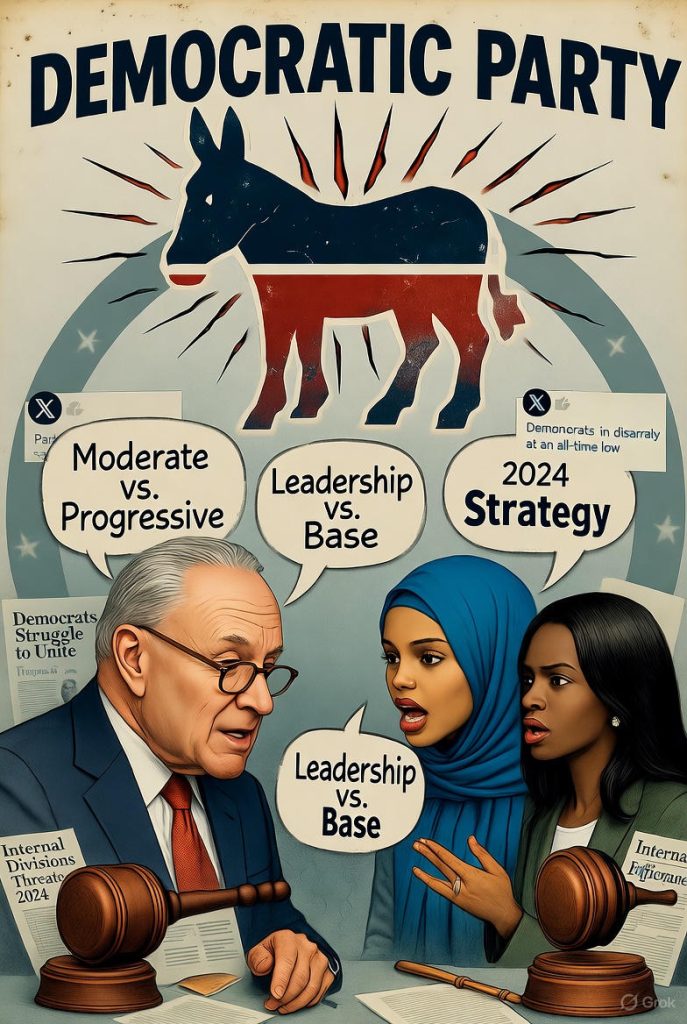
London, 23 October 2025 – The Democratic Party entered the autumn of 2025 still reeling from the 2024 electoral sweep that stripped it of the White House, the Senate and a further share of the House. As the minority in Washington, the party now faces an existential reckoning: a widening voter‑registration deficit, stark internal divisions and an urgent need to redefine its identity in a political landscape still dominated by Donald Trump.
1. The Numbers Behind the Malaise
Indicator
Latest Figure (Q2 2025)
Trend
Party affiliation edge
+3 percentage points over Republicans
Modest gain that masks deeper weakness
Favourability
33 % positive, 63 % negative
Historic low
Generic‑ballot lead
+1‑2 points ahead of 2026 mid‑terms
Sharply narrowed from a 9‑point lead in 2017
Voter‑registration defections (2020‑2025)
>5 million former Democrats have switched parties
Accelerating outflow, especially among working‑class and Latino voters
Despite a three‑point affiliation edge, the party’s core metrics reveal a coalition in disarray. On X, users repeatedly describe the situation as an “ideological hollow” and a “civil war” over strategy, ranging from shutdown brinkmanship to foreign‑policy rifts.
2. Institutional Position
Congressional minority – Both chambers are controlled by Republicans. Senate Minority Leader Chuck Schumer has been forced into obstructionist tactics, notably a shutdown standoff over foreign aid and border security that even friendly media such as CNN have labelled self‑sabotaging.
State and local footholds – Democrats retain 23 governorships, 17 state legislatures and trifectas in 15 states, plus majorities in the nation’s largest cities. State‑level contests, such as New Jersey’s 2025 gubernatorial race, are becoming testing grounds for anti‑Trump messaging.
Judicial presence – Three of the nine Supreme Court justices remain Democratic appointees, offering a thin defensive bulwark against an otherwise conservative bench.
3. Core Challenges
3.1 Voter Erosion and Registration Crisis
Working‑class, non‑college‑educated voters across racial groups have abandoned the party, viewing Democrats as elite caretakers of a failing system. Latino support, once a reliable pillar, swung 15 points toward Republicans in the 2024 exit polls. Younger voters, particularly men born in the 1990s, cite pandemic‑era lockdowns and stagnant wages as lasting grievances.
3.2 Internal Divisions and Leadership Vacuum
The party’s ideological spectrum stretches from the progressive “Squad” to moderate centrists, hampering unity. Public disputes over Israel aid, shutdown tactics and “defund the police” reforms have turned internal debates into a visible “civil war” on social media. With President Biden’s advancing age and Vice‑President Harris’s brief tenure, there is no clear successor to rally the base; 45 % of Democrats now prefer a moderate over a progressive candidate, yet the “Marxist Left” retains strong influence in primary contests.
3.3 Policy and Messaging Missteps
“Woke” initiatives—DEI programs, transgender‑rights policies and calls to “defund the police”—have alienated moderate voters and reinforced the “woke extremism” label. Economic concerns—inflation, border‑security anxieties and perceived over‑regulation—were central to the 2024 defeat, while an over‑emphasis on anti‑Trump rhetoric has crowded out substantive policy proposals. Structural disadvantages, including a Senate map tilted toward Republicans and shifting Electoral‑College demographics, further handicap Democratic prospects.
4. Strengths and Opportunities
Urban and suburban bases – Democrats dominate diverse metros and enjoy a 12‑point gender gap among college‑educated women.
Issue resonance – Compassionate stances on abortion, climate change and equality still generate positive sentiment (29 % of respondents cite “compassion”).
GOP vulnerabilities – Trump’s increasingly authoritarian moves (e.g., aggressive deportations) and ongoing corruption investigations provide contrast material for Democrats.
Historical precedents – Past recoveries (post‑Watergate, post‑2008) were built on moderation, technological adaptation and a refreshed narrative—areas where Democrats can still innovate.
5. Strategic Outlook
5.1 Likely Scenarios for 2026
Scenario
Description
Likelihood
Implications
Centrist Re‑calibration
A moderate leader steers the party toward pragmatic economic policies, pruning overt “woke” language.
Moderate
Restores credibility with swing voters; risks alienating the progressive base.
Progressive Consolidation
The party doubles‑down on bold climate, social‑justice and redistribution measures.
Low‑moderate
Energises the base and fundraising; may deepen voter attrition among working‑class whites and Latinos.
Hybrid Populist‑Progressive Model
Combines progressive social policies with populist economic messaging (AI‑job guarantees, wage growth, anti‑elitist rhetoric).
High
Offers a distinctive niche that could win back disaffected working‑class voters while retaining progressive support.
Given current polling and voter‑registration trends, the Hybrid Populist‑Progressive model appears the most viable path. It acknowledges genuine economic grievances while preserving the party’s moral leadership on climate, equity and democratic norms. Execution, however, demands a charismatic, policy‑savvy figure capable of articulating this synthesis without descending into partisan vitriol.
5.2 Tactical Recommendations
Launch a “Future‑Jobs” Initiative – Federal investment in AI reskilling, green‑infrastructure projects and rural broadband, framed as a direct response to working‑class concerns.
Form a “Moderate‑Progressive Council” – An internal body that brings together centrist and progressive leaders to vet messaging, reducing public infighting.
Deploy data‑driven micro‑targeting – Tailor outreach at the precinct level: climate narratives for coastal districts, economic‑security messages for Rust‑Belt counties, and immigrant‑rights advocacy in Latino‑heavy suburbs.
Elevate a unifying spokesperson – Fast‑track a governor or Senate newcomer with bipartisan appeal and a compelling personal story to serve as the party’s public face ahead of the 2026 mid‑terms.
6. Bottom Line
The Democratic Party’s institutional assets—urban strongholds, favourable issue perception and a thin Supreme‑Court foothold—remain intact. Yet structural weaknesses—leadership vacuum, voter attrition and internal discord—threaten long‑term relevance. A strategic pivot toward a populist‑progressive synthesis, anchored by a clear, charismatic leader and grounded in concrete economic solutions, offers the best chance to halt the decline, rebuild the coalition and position the party for a competitive showing in the 2026 mid‑terms and beyond.
The road ahead is steep, but history shows that parties that adapt survive; those that cling to outdated narratives risk fading into the opposition.
London, 23 October 2025 – The once‑unified “Make America Great Again” (MAGA) coalition is showing signs of fracture as isolationist hard‑liners clash with interventionist hawks over foreign‑policy priorities and loyalty to former President Donald Trump. Recent eruptions on social‑media platforms and in the podcast circuit point to a brewing power struggle that could reshape the Republican Party’s direction ahead of the 2026 mid‑term elections.
A Battle of Ideologies
At the centre of the dispute are two opposing visions for America’s role abroad. On one side sit congresswoman Marjorie Taylor Greene and former Fox News host Tucker Carlson, championing an isolationist agenda that frames any overseas engagement as a betrayal of the “five pillars” of MAGA – nationalism, anti‑establishment sentiment, economic protectionism, cultural conservatism and a hard‑line stance on immigration.
Opposing them are Senate stalwarts Ted Cruz and Lindsey Graham, whose record of supporting robust defence spending and backing U.S. aid to Israel places them firmly in the hawkish camp. Adding volatility to the mix is activist Laura Loomer, whose penchant for “loyalty audits” and public denunciations has made her both a useful enforcer and a potential liability.
Short‑Term Surge: Public Bloodletting and Trump’s Intervention
Over the next three months, analysts anticipate an escalation of public spats across X, YouTube and a raft of right‑wing podcasts. Loomer’s August 2025 tirade against Carlson – in which she labelled him a “fraud” and warned of “purity erosion” – exemplifies the intensity of the exchanges. Greene is expected to continue exploiting Carlson’s platform to paint hawkish senators as “warmongers”, while Cruz and Graham will likely resort to subtler shade‑throwing, positioning themselves as loyal to Trump while preserving their legislative clout.
Insiders report that the White House is already uneasy about Loomer’s growing influence. A confidential source, speaking on condition of anonymity, noted that “the administration sees Loomer’s tactics as a double‑edged sword – they mobilise the base but risk alienating even the most ardent supporters.”
Donald Trump, whose brand thrives on chaos, is predicted to let the feud simmer before stepping in with a unifying tweet or rally remark. By December 2025, a tentative truce is likely: Greene will be elevated as a congressional enforcer, Loomer relegated to an advisory capacity, and the narrative refocused on attacking Democrats and the “deep state”.
Long‑Term Outlook: Hardened Purity Tests and a Marginalised Loomer
If the current trajectory holds, the isolationist wing – Greene, Carlson, Steve Bannon and Lauren Owens – may consolidate grassroots credibility by positioning themselves as “exposers of fakes”. This could nudge Trump’s foreign‑policy posture toward greater restraint on aid to Israel and a softer stance on Iran, echoing the rhetoric of his 2024 campaign.
Conversely, hawkish senators will retain their Senate leverage but may lose street‑cred among the purist base. Loomer’s history of rapid rises and falls – from her 2018 ban on X to the 2025 deposition where she hurled personal insults at Greene, Harris and Graham – suggests she will likely burn out by mid‑2026, either retreating to a niche media venture or disappearing from the mainstream spotlight.
Policy implications are significant. Intra‑party discord could stall or dilute key legislative initiatives, from foreign‑aid packages to budget negotiations, creating opportunities for government shutdown brinkmanship. Yet the “America First” brand will remain tethered to Trump’s weekly pronouncements, limiting any substantive shift away from his personal agenda.
Electoral Consequences
Democrats stand to benefit from the spectacle, as the Republican infighting diverts attention from legislative achievements and offers a steady stream of “popcorn” headlines. While the GOP may preserve narrow majorities in the 2026 mid‑terms, the party is expected to experience a surge in primary challenges – the so‑called “RINO” attacks – that could further fragment its ranks.
Political scientists warn that repeated “loyalty audits” risk normalising a culture of intra‑party surveillance, eroding institutional memory and undermining policy continuity. The long‑term health of the Republican caucus may therefore hinge on whether Trump can successfully re‑assert his gravitational pull over these competing factions.
Looking Ahead
Key flashpoints – the 2025 NATO summit, renewed Israel‑Iran tensions in early 2026, and the upcoming mid‑term primaries – will serve as barometers for the balance of power within MAGA. Observers will be watching closely for any shift in tone from Greene, Carlson, Cruz, Graham and Loomer, as well as for Trump’s strategic interventions.
In the meantime, the battle lines drawn today suggest a party caught between an isolationist insurgency and a hawkish establishment, with a charismatic leader attempting to steer both toward a single, albeit precarious, destination. Whether this internal turbulence will weaken the GOP’s electoral prospects or merely reshuffle its internal hierarchy remains to be seen.
Family communication is often the hidden lever that determines whether wealth moves smoothly across generations or gets tangled in friction. Below is a progressive‑leaning, multidimensional look at why dialogue—or its absence—can make or break wealth transfer.
1. Trust as the Currency of Transfer
How communication builds trust
Transparency about assets, liabilities, and intentions reduces speculation.
Regular, open conversations normalize the idea that wealth is a family resource, not a private hoard.
When trust erodes
Secret‑keeping or sudden revelations (e.g., undisclosed debts) trigger suspicion, prompting heirs to protect themselves legally rather than collaboratively.
Takeaway: Trust isn’t just emotional—it’s the lubricant that lets legal mechanisms (trusts, wills) function without constant renegotiation.
2. Shared Narrative & Purpose
Crafting a collective story
Families that articulate why wealth exists—values, mission, legacy goals—create a unifying narrative.
This narrative guides decision‑making (philanthropy, entrepreneurship, stewardship) and aligns disparate interests.
Fragmented narratives
When each branch tells its own story, competing visions emerge: “preserve the estate” vs. “grow the portfolio,” leading to deadlock or splintering.
Progressive lens: Encourage a living manifesto—a document that evolves with each generation, reflecting shifting social values (e.g., climate‑focused investing, impact philanthropy).
3. Emotional Intelligence & Conflict Management
Proactive conflict resolution
Structured family meetings, facilitated by neutral parties (counselors, financial coaches), surface grievances before they fester.
Emotional intelligence training helps members articulate needs without triggering defensiveness.
Reactive or suppressed conflict
Unaddressed resentment can manifest as legal battles, tax inefficiencies, or outright asset dissipation.
Innovation tip: Use digital collaboration platforms (secure, encrypted) that allow asynchronous dialogue, so geographically dispersed families stay connected.
4. Knowledge Transfer & Financial Literacy
Democratizing expertise
When senior members mentor younger ones on investment principles, tax planning, and governance, the next generation feels competent to steward assets.
This reduces reliance on external advisors who might prioritize fees over family goals.
Knowledge gaps
A lack of financial literacy breeds fear, prompting heirs to either sell assets prematurely or cling to control, stalling the transfer process.
Future‑forward idea: Incorporate gamified learning modules (e.g., simulations of portfolio management) into family education programs.
Written guidelines on voting rights, quorum requirements, and dispute escalation create predictability.
Regular reviews of these protocols keep them aligned with evolving family dynamics.
Ambiguity or ad‑hoc decisions
Without agreed‑upon rules, decisions become personality‑driven, increasing the risk of favoritism or misallocation.
Strategic angle: Adopt a multi‑tiered council—an advisory board for long‑term vision and an operational committee for day‑to‑day decisions—both clearly defined and communicated.
6. Cultural & Generational Shifts
Embracing diversity of thought
Younger members may prioritize ESG (environmental, social, governance) investments, while older members focus on capital preservation.
Open dialogue about these differing priorities prevents the “one‑size‑fits‑all” trap.
Resistance to change
When families cling to legacy mindsets, they risk obsolescence—assets may be under‑utilized or misaligned with contemporary opportunities.
Progressive practice: Host intergenerational “future‑vision” workshops where each cohort proposes bold, speculative ideas (e.g., crypto, space tech) and evaluates them together.
7. Legal & Tax Implications
Communicating the “why” behind structures
Explaining the purpose of trusts, gifting strategies, and tax shelters demystifies them, reducing suspicion.
Hidden legal maneuvers
When legal tactics are concealed, heirs may view them as manipulative, prompting challenges that can trigger costly probate or tax penalties.
Best practice: Conduct an annual “wealth health check” where the family lawyer presents a plain‑language summary of the legal landscape.
Digital dashboards give real‑time visibility into asset allocation, performance, and upcoming milestones.
Caution: Tech should augment—not replace—human connection. Over‑reliance on data can depersonalize the emotional aspects of wealth transfer.
TL;DR
Family communication shapes trust, shared purpose, emotional resilience, knowledge flow, governance clarity, and adaptability—all of which are essential for smooth wealth transfer. When dialogue is intentional, inclusive, and forward‑looking, wealth becomes a catalyst for collective growth rather than a source of division.
What would you like to explore next?
Designing a family charter that captures values, decision‑making rules, and future‑vision statements.
Practical tools (templates, meeting agendas, tech platforms) to institutionalize communication.
Case studies of families that successfully navigated multigenerational wealth transfer through robust dialogue.
Let me know which direction resonates most, or feel free to steer the conversation toward another facet of the topic!
Why Now Is the Perfect Moment to Embrace a Gypset‑Zen‑Tao‑Boho‑Jet‑Set Lifestyle An essay inspired by the latest American‑diaspora research of @economicsonx
When the word gypset first entered the lexicon, it described a hybrid of “gypsy” wanderlust and “jet‑setter” affluence—a life lived on the move, yet with the comforts of modern luxury. Add a dash of Zen mindfulness, a sprinkle of Taoist effortless flow (wu‑wei), and a generous helping of bohemian creativity, and you arrive at a lifestyle that feels less like a trend and more like an evolution of how we choose to exist.
Recent data on the emerging American diaspora shows that this evolution is not only desirable—it is already underway. Below, I weave together the hard numbers with the softer currents of philosophy to illustrate why today is arguably the coolest—and most feasible—time to adopt the gypset‑zen‑tao‑boho‑jet‑set way of life.
1. The Numbers Tell a Story of Appetite and Opportunity
Insight
What the data says
Why it matters for a boho‑jet‑set life
Interest vs. reality
Only 1.5 % of Americans currently live abroad, yet 34 % say they’d love to do so (Monmouth University, 2024).
There is a huge, untapped market of dreamers ready to convert intention into action.
Top destinations
Mexico (~800 k), Canada (~1.3 M), plus European and Asian hubs.
These places already host vibrant expat enclaves, co‑working spaces, and affordable creative scenes—perfect launch pads for a boho lifestyle.
Remote‑work catalyst
Remote‑friendly policies and “digital‑nomad” visas have exploded, turning short trips into long‑term stays.
You can earn in dollars while sipping tea in a Bali beachfront bungalow or sketching in a Lisbon loft.
High‑net‑worth sentiment
Over 50 % of American millionaires are contemplating relocation after the 2024 election, regardless of the outcome.
Wealthy movers bring capital, cultural patronage, and a willingness to fund artistic, sustainable projects—fuel for any bohemian community.
These figures paint a picture of a global talent pool that is both financially capable and philosophically inclined toward a freer, more intentional existence.
2. Economic Leverage: Money Where It Matters
Cost‑of‑living arbitrage – Living in Mexico, Portugal, or Thailand can be 30‑70 % cheaper than in San Francisco or New York. Your dollar stretches further, letting you afford a spacious studio, a rooftop garden, or a small gallery space—luxuries that would be out of reach at home.
Tax‑smart mobility – While the U.S. taxes worldwide income, many expatriates use legal structures (foreign earned‑income exclusion, tax treaties) to reduce liability. The result? More disposable income to invest in art supplies, travel, or community‑building ventures.
Remittance & “digital diaspora” – Even while living abroad, many Americans keep U.S. bank accounts, invest in domestic markets, and send money home. This dual‑economy creates a safety net and a steady cash flow that sustains a nomadic lifestyle without sacrificing financial stability.
3. Philosophical Alignment: Zen, Tao, and Boho Freedom
The gypset‑zen‑tao‑boho ethos is more than a lifestyle; it is a mindset that harmonizes external mobility with internal stillness.
Zen mindfulness teaches us to savor each moment—whether we’re meditating on a rooftop in Medellín or sketching street art in Marrakech. The practice of zazen (seated meditation) becomes easier when we’re not chained to a single office desk.
Taoist wu‑wei (effortless action) encourages us to flow with the currents of change. Instead of fighting the inevitable shifts in geopolitics or market conditions, we ride them—choosing a new city when a visa opens, or swapping a high‑rise apartment for a countryside retreat when the season calls.
Bohemian creativity thrives on cultural cross‑pollination. Living among diverse communities fuels artistic inspiration, whether you’re writing poetry in a Berlin coffee house or curating a pop‑up gallery in Oaxaca.
Together, these philosophies turn the logistical challenges of constant relocation into opportunities for growth, rather than sources of stress.
4. Infrastructure Already Exists
Co‑working & co‑living hubs—WeWork, Selina, Outsite, and dozens of boutique collectives now offer combined workspaces, short‑term rentals, and community events. They are the modern equivalents of the old artist colonies, but with high‑speed internet and reliable utilities.
Digital‑nomad visas—Countries like Estonia, Barbados, Croatia, and Costa Rica now grant 6‑12‑month visas specifically for remote workers. The paperwork is straightforward, and the governments actively market themselves to the very demographic we discuss.
Creative marketplaces—Platforms such as Etsy, Patreon, and Substack let you monetize art, writing, or teaching from anywhere. Coupled with a global client base, you can sustain a modest yet comfortable income while traveling.
5. Cultural Resonance: The New American Narrative
Historically, the American story has been one of expansion—westward, then overseas. Today, that expansion is psychological rather than territorial. The diaspora research shows a generational shift: Millennials and Gen‑Z prioritize experience, purpose, and flexibility over traditional markers of success. The gypset‑zen‑tao‑boho lifestyle speaks directly to those values.
Moreover, the “American Dream” is being reframed. Instead of owning a single house in a suburb, many now envision a portfolio of homes, studios, and memories scattered across continents. This redefinition aligns perfectly with the bohemian ideal of “home is wherever you lay your hat.”
6. A Blueprint for the Modern Gypset
Choose a gateway city—Start with a destination that offers affordable living, a strong expat community, and reliable internet (e.g., Medellín, Chiang Mai, Lisbon).
Secure a digital‑nomad visa—Apply early; most require proof of income (often $2,500‑$3,500/month).
Build a portable income—Freelance, consult, sell digital products, or teach online.
Cultivate a mindful routine—Daily meditation, journaling, and regular movement keep the mind anchored amidst constant change.
Engage locally—Attend workshops, join co‑living spaces, and collaborate with local artists to embed yourself in the cultural fabric.
Iterate—Every six months, reassess your location, finances, and emotional wellbeing. The Tao teaches us to adapt fluidly, not rigidly.
7. Closing Thought: The World Is Your Canvas
The convergence of economic feasibility, technological enablement, and philosophical alignment makes 2024‑2025 a uniquely opportune window for the gypset‑zen‑tao‑boho‑jet‑set lifestyle. The data tells us that millions of Americans are already dreaming of this shift; the infrastructure tells us it’s practical; the ancient wisdom tells us it can be deeply fulfilling.
So, if you’ve ever felt the tug of distant horizons, the whisper of a drum circle in a sun‑drenched courtyard, or the quiet hum of a laptop powering a creative venture from a balcony overlooking the sea—listen. The world is waiting, and the moment has never been cooler.