
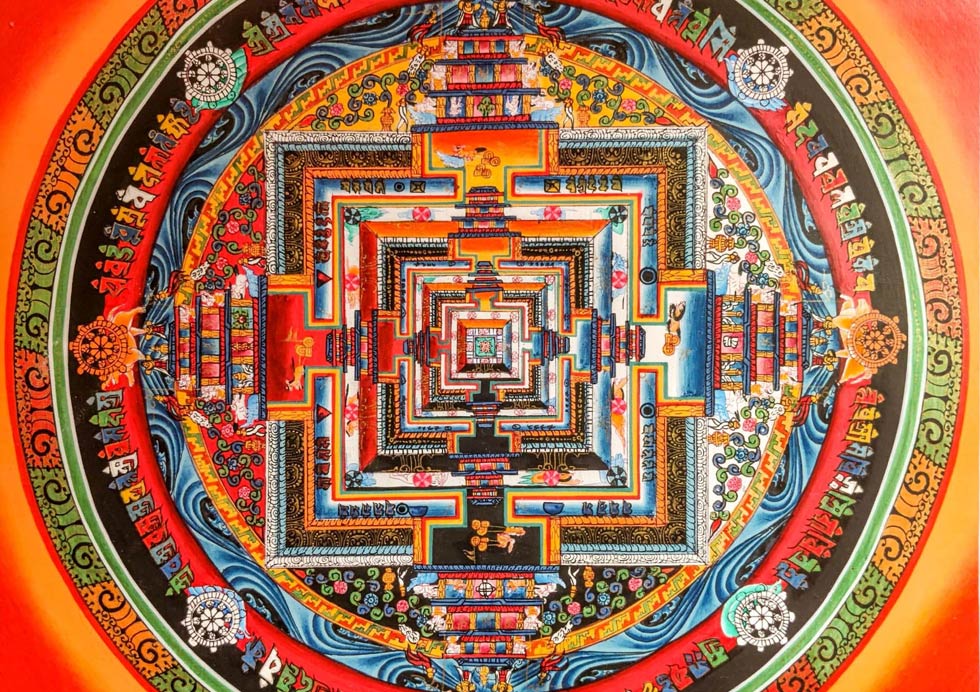
Tantric Buddhism, also known as Vajrayana (Diamond/Thunderbolt Vehicle), Mantrayana (Mantra Vehicle), or Esoteric Buddhism, is a branch of Mahayana Buddhism that emerged in India around the 6th-7th centuries CE and became prominent in Tibet, Bhutan, Nepal, Mongolia, and parts of East Asia (e.g., Japanese Shingon). It builds on Mahayana foundations like bodhicitta (altruistic aspiration for enlightenment) and emptiness (shunyata) but introduces esoteric methods for rapid enlightenment, potentially in one lifetime.
Key Tenets and Principles
- Rapid Path to Enlightenment
Vajrayana is called the “result vehicle” because it allows practitioners to achieve Buddhahood swiftly by directly identifying with the enlightened state now, rather than gradually over eons. It uses transformative techniques to “shortcut” the process while emphasizing the indestructible (vajra-like) nature of the mind.
Deity yoga visualizations: Practitioners imagine themselves as enlightened beings (e.g., with seed syllables like HRIH at the heart) to realize innate Buddha-nature.
- Deity Yoga (Visualizing Oneself as a Buddha-Figure)
The core practice: Practitioners visualize themselves as a yidam (meditational deity), often in wrathful or peaceful forms, to transform ordinary perception into pure vision. This realizes that samsara (cyclic existence) and nirvana are non-dual, and phenomena are empty yet appear purely. 6 “LARGE” 7 “LARGE”
Wrathful deities like Yamantaka (conqueror of death) or Vajrakilaya symbolize the fierce energy needed to cut through ignorance, anger, and desire.
- Mantras, Mudras, and Mandalas
Sacred sounds (mantras), hand gestures (mudras), and symbolic diagrams (mandalas) represent the enlightened body, speech, and mind. Reciting mantras invokes deity energies; mandalas depict the universe as a pure realm.

Intricate mandalas, often created with colored sand (later dissolved to symbolize impermanence), serve as aids for meditation and ritual.
- Empowerment (Abhiṣeka/Initiation) and Guru-Disciple Relationship
Practices are esoteric and transmitted only through initiation by a qualified guru, who activates the student’s Buddha-nature potentials. Guru yoga—merging one’s mind with the teacher’s enlightened mind—is essential. Tantric vows (samaya), including 14 root vows, must be upheld strictly.
The vajra (thunderbolt scepter, symbolizing method/compassion) and bell (symbolizing wisdom/emptiness) are key ritual items, representing the union of opposites.
- Transformation of Passions and Non-Duality
Rather than renouncing desires, tantra transforms them into wisdom (e.g., anger into clarity). It unites opposites: wisdom and compassion, emptiness and appearance, often symbolized by yab-yum (deity in union). Higher classes (e.g., Highest Yoga Tantra) may include subtle energy practices with the body’s channels and winds. - Purity of Perception
The world, body, and experiences are seen as inherently pure—the environment as a mandala, beings as deities, actions as enlightened deeds.
Vajrayana incorporates preliminary practices (ngöndro) like refuge, bodhicitta, purification (Vajrasattva), and offerings to build foundation. While powerful, it’s considered advanced and potentially risky without proper guidance, as misuse can amplify negative karma.
These tenets make Tantric Buddhism a profound, experiential path emphasizing direct realization through skillful means.
Rewritten Overview
The Buddhist Tradition That Embraces Sexual Practice Most Directly
The branch of Buddhism that incorporates sexual yogic techniques most explicitly is Vajrayāna (also called Tantric or Esoteric Buddhism). Within Vajrayāna, the most advanced category—Anuttarayoga Tantra (the “Highest Yoga Tantra”)—contains the complete set of sexual practices, especially as they are transmitted in Tibetan Buddhism across its four major schools (Nyingma, Kagyu, Sakya, and Gelug).
Core Elements
| Aspect | Description |
|---|---|
| Karmamudrā (sexual yoga) | A consummate practice that involves a physical consort (often a fully ordained monk or nun) engaging in ritualized sexual union. The act is performed with precise visualizations, mantra recitation, and breath control to generate intense bliss (mahasukha). This bliss is then used as a potent fuel for realizing emptiness and accessing the subtle “clear‑light” mind. |
| Prerequisite trainings | Practitioners must first master inner‑heat (tummo) meditation and other foundational yogas. Only after receiving proper initiations (empowerments) and extensive guru instruction may they be authorized to undertake karmamudrā. |
| Key tantras | The practice appears in the highest tantras such as Guhyasamāja, Hevajra, Cakrasamvara, and Kalachakra. Each presents a systematic path that moves from visualized (jnanamudrā) to physically enacted union. |
| Purpose | Rather than seeking sensual pleasure, the practice aims to transform ordinary desire into the wisdom of emptiness, thereby accelerating the path to enlightenment within a single lifetime. |
| Secrecy and selectivity | Karmamudrā is reserved for a very small, highly qualified segment of Vajrayāna practitioners. Most monks, nuns, and lay followers rely exclusively on non‑sexual methods (visualizations, mantra, meditation). |
Comparison With Other Buddhist Traditions
| Tradition | Relationship to sexual practice |
|---|---|
| Japanese Shingon | Tantric in nature but limits itself to symbolic union (mantra, mudra, mandala). Physical sexual yoga is absent. |
| Lower tantric classes (Kriyā, Caryā, Yoga) | Employ only visualized or symbolic bliss (e.g., gazing at a deity, subtle body sensations). No physical consort is involved. |
| Theravāda & most Mahāyāna schools (Zen, Pure Land, etc.) | Do not incorporate tantric sexual methods; sexuality is generally viewed as a potential obstacle to liberation. |
Important Caveats
- Not central to Vajrayāna – Sexual yoga is a peripheral, elite subset of the tradition, not its everyday practice.
- Ethical safeguards – Authentic karmamudrā demands strict vows, informed consent, and a mature guru‑disciple relationship. Abuse of power has occurred historically, but genuine lineages treat the practice with utmost seriousness.
- Alternative paths – For those unable or unwilling to engage in physical union, jnanamudrā (visualized sexual yoga) offers a comparable method using imagination alone.
Powerful Omissions Often Overlooked
- Historical Context & Lineage Variations
- While the practice is present throughout Tibetan schools, the frequency and emphasis differ. Nyingma and Kagyu lineages historically placed greater practical weight on karmamudrā, whereas Gelug scholars sometimes treated it more theoretically.
- Early Indian tantric masters (e.g., Śāntarakṣita, Tilopa) described sexual practice, but many later commentaries either concealed or re‑interpreted it, leading to regional disparities.
- Gender Dynamics
- Traditional texts frequently prescribe a male practitioner with a female consort, reflecting historic gender norms. Contemporary lineages are increasingly exploring female‑initiated practices and same‑sex consorts, though these remain rare and often contested.
- Health & Psychological Considerations
- Modern scholarship highlights the need for psychological readiness and physical health assessments before attempting karmamudrā, given the intense physiological effects of tummo and orgasmic bliss.
- Legal & Institutional Restrictions
- Many monastic institutions today explicitly prohibit physical sexual practice for monks and nuns, limiting karmamudrā to lay practitioners or special hermitage settings. This institutional stance is sometimes omitted in idealized accounts.
- Relation to Modern Scientific Research
- Recent neuroscientific studies on blissful states and neuroplasticity echo tantric claims that sustained bliss can catalyze profound shifts in perception, but rigorous empirical validation remains limited.
- Ethical Safeguards & Modern Reform Movements
- In response to documented abuses, several contemporary Tibetan teachers have instituted transparent consent protocols, third‑party oversight, and mandatory training for both partners—details that are often left out of traditional expositions.
- Integration With Secular Mindfulness
- Some modern mindfulness programs draw inspiration from tantric mind‑body integration (e.g., breath‑linked pleasure awareness) without adopting sexual components. Recognizing this bridge helps situate karmamudrā within broader contemplative trends.
Bottom line: Vajrayāna’s Highest Yoga Tantra houses the most explicit sexual yogic practices in Buddhism, but they constitute a tightly regulated, minority pathway. Understanding the practice fully requires attention to lineage nuances, gender roles, ethical safeguards, and contemporary reforms—elements that are frequently omitted in simplified overviews.