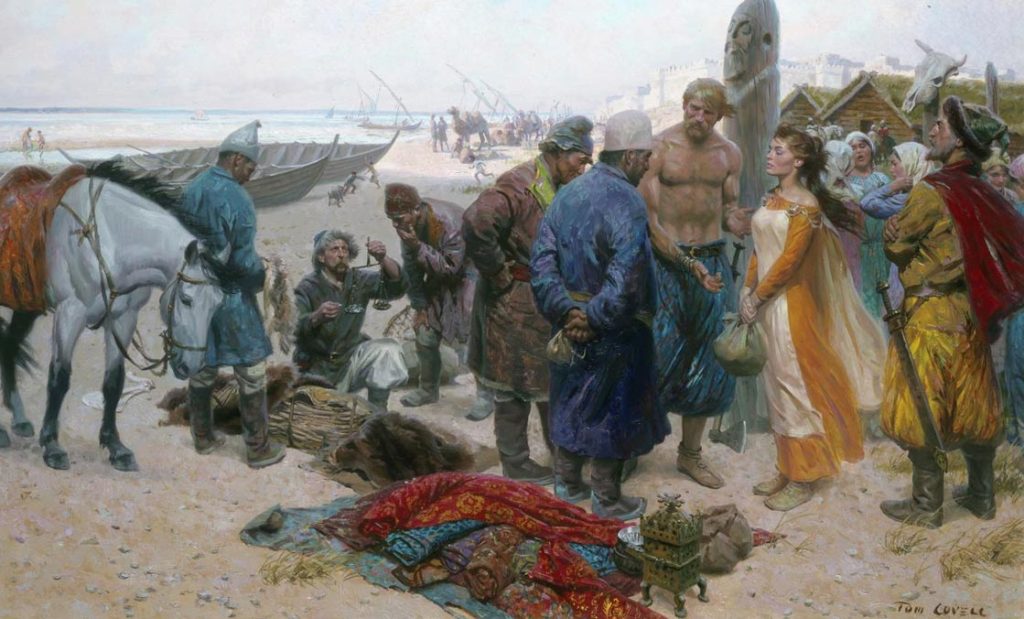
The old Norse called slaves thralls (þræll), and thralls were the backbone of many a farm and household. Raids on Ireland, Britain, the Frankish lands, and even farther shores brought back thousands of captives—men for heavy toil, but women and girls especially prized. The Irish annals speak plain: in 821, the heathens struck Howth and “carried off a great booty of women into captivity.” Again and again, the chronicles note such hauls, for women fetched high silver in the markets of Dublin, Hedeby, or farther east along the Volga.
These foreign women—often Celtic from Ireland or Scotland, Slavic from the east, or others—served as cooks, milkmaids, weavers, and laborers. But many became concubines (frilles) to their masters. The Arab traveler Ibn Fadlan, beholding the Rus (Viking kin on the Volga), wrote of chieftains keeping scores of slave-girls for bed and trade, bedding them openly while others watched. In Laxdæla saga, the chieftain Höskuldr buys the Irish princess Melkorka at a slave market for three marks of silver—thrice the usual price—and takes her as concubine; she bears him a son who rises to fame.
Archaeology bears grim witness too: iron collars and shackles from trading towns, graves where decapitated women lie with wealthy men (sacrificed to follow in death), and bones showing hard lives far from home. DNA from Iceland tells the tale clearest—many founding mothers carry Gaelic blood, while the fathers are Norse, speaking of women brought across the sea, willing or (far more oft) unwilling.